Al fresco Greggs lunches and the ‘stickiness’ of public space
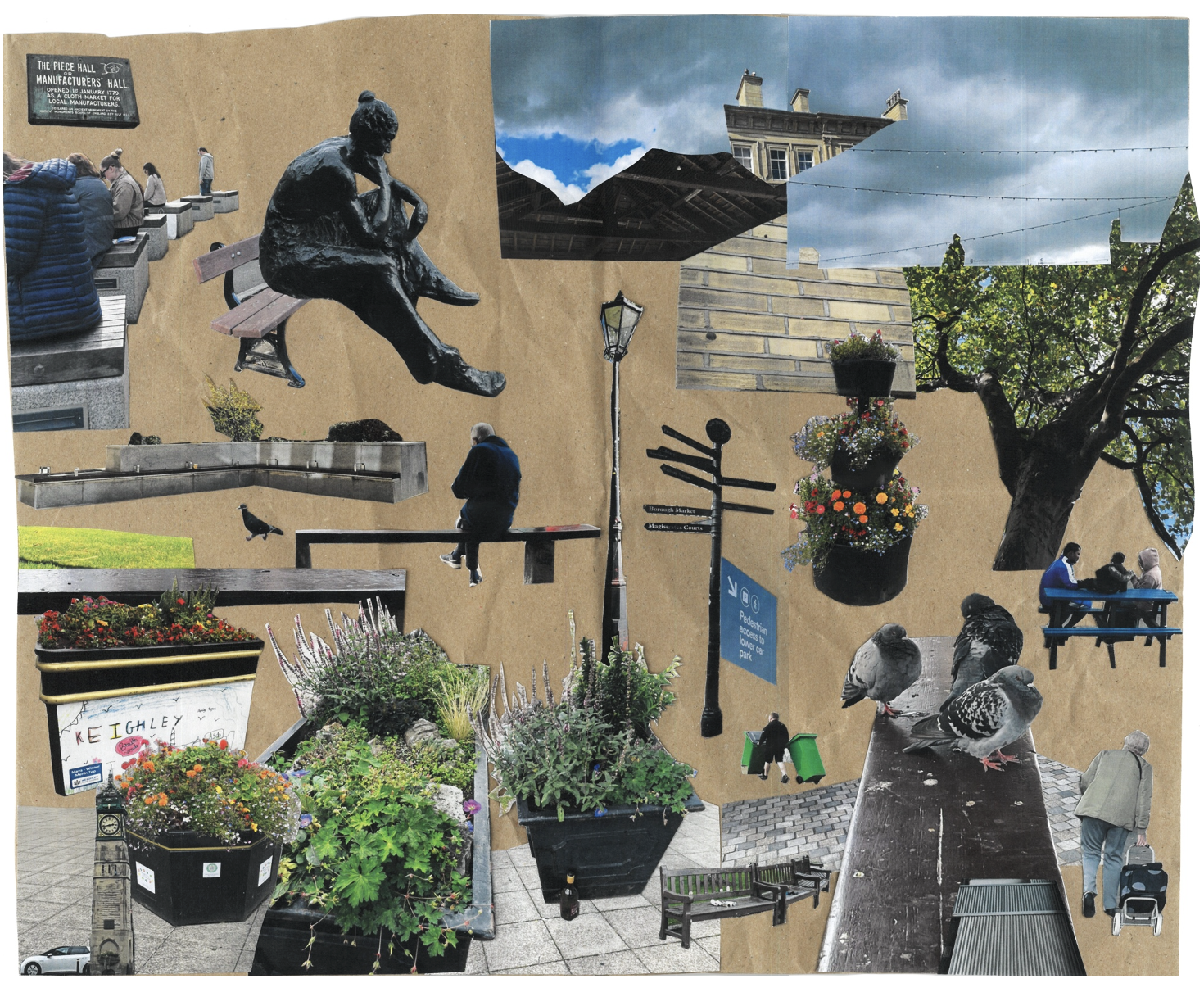
Collage 1. Made using photographs I took in Otley, Keighley, and Halifax.
People eating lunch
People reading the paper
People chatting on the phone
People smoking and vaping
People walking their dogs
People sitting
People pausing
People pushing prams
Engines revving
Wheelie bins rolling
Paper bags rustling
Pigeons strutting
Pigeons huddling
Pigeons pecking at crumbs
These observations are part of an action learning project, with Street Space, exploring the relationship between social behaviour and the street furniture situated in three West Yorkshire town centres. As this project is reflective and open in nature, our definition of street furniture is also flexible. It can be used to refer to objects found in public space — including, but not limited to, signs, planters, benches, barriers and bollards, statues, bus shelters, bike racks, and lighting. Still in its initial phase, the project has so far involved visiting the town centres of Otley, Keighley, and Halifax, to explore the types of existing street furniture in place and observe if, and how, people interact with them. Impressions gathered through this preliminary work by no means capture the full extent to which these sites are encountered and perceived by the public; however, they have provoked some questions about the significance of these everyday objects and their contribution to placemaking. These thoughts are helping to shape the scope of the project moving forward.
Dwell time
One topic of interest emerging is the influence of street furniture on ‘dwell time’ — i.e. how long people spend in a place. During a visit to Otley, I sat on a bench for around two hours, writing down my observations and sketching. This was markedly longer than most people’s use of the seating around me, an average length of time appearing to be around 15 minutes. People sat for a quick coffee break in the middle of a bike ride, to smoke a cigarette, or to eat a pastry purchased at the nearby Greggs. As soon as the coffee cup was drained, the cigarette stubbed, and the paper bag of crumbs crumpled up, people were on their way. In other words, this seating area appeared as a place to pause briefly, but not to dwell in any longer than necessary. After a period of sitting, I found the backless bench became a source of discomfort, and the outlook onto busy traffic didn’t necessarily inspire an impulse to linger longer. The pigeons notably stuck around more than people, and in some cases their ‘deposits’ on the benches also influenced where individuals chose to sit. The birds’ daily schedules likely allow more time for lingering than that of people on their lunch breaks…and yet, this observation has made me consider the capacity of street furniture to encourage dwell time (amongst multiple species!) in town centres.
Canadian city planner Brent Toderian coined the phrase ‘sticky streets’ to refer to the role of design in prioritising pedestrian experience and encouraging people to slow down, stop, and stay to enjoy urban spaces. The more these behaviours are cultivated through design, the ‘stickier’ the street.
When visiting The Piece Hall in Halifax, my colleague Phillippa, noted how the Anne Lister sculpture displayed at the site mirrored the way members of the public were seated (as depicted in the top left of Collage 1). Here a piece of street furniture — the sculpture, created by Diane Lawrenson — was indicative of how people were using the public space and other street furniture available in it. People were sitting on the picnic benches, marble cubes, and steps. Generally, folks seemed to linger for longer here. Granted the street furniture is just one reason within the overall impetus to stay for a duration at this particularly ‘sticky’ site. The local businesses, historic architecture, and contained design of the landmark — that provides an ‘eyes on the street’ layout — are also intrinsic to the appeal of spending time here. There’s something about thefeelof the site that compels you to stay. We also visited on a sunny day, and weather is undeniably a contributing factor when it comes to dwelling time. But this too is something the design of street furniture can account for, as Toderian notes ‘the right combination of sun, shade, wind protection, water (especially to create “white noise” for noisy streets) and micro-climates designed for the specific local context’ can have a bearing on the ‘stickiness’ of a place.
Many of the suggestions put forward in the Keighley Development Framework, published in June 2024 by Bradford Council, consider ways of extending time spent in its public spaces; for instance, recognising that ‘there is potential to create new public squares which, alongside appropriate uses, will generate greater dwell-time and activity within the town centre’. This indicates that the value of increasing dwell time and the ‘stickiness’ of Keighley is known to the local council. How could the design and incorporation of street furniture help support this developmental goal? Observations gleaned from site visits on this project have inspired us to start reimagining existing infrastructures. For example, what if, in town centres, businesses like Greggs that often rely on food-on-the-go trade invest in the provision of public space for people to dwell in?
Who gets to dwell?
In thinking about the relationship between street furniture and social behaviour, there is another important question to ask — who is more or less likely to dwell in these town centres and why? What are the existing barriers to dwelling? What role might everyday objects play in this?
This builds on the previous work of Street Space projects, such as Toddler Town that considers town centres from the perspective of 95cm (the average height of a 3-year-old), taking into account how children experience and interact with public space. The question of who could also be extended to the dwelling activity of more-than-humans, reflecting on the potential of street furniture, such as planters and trees, to promote biodiversity in urban space.
In addition, it raises questions around so-called ‘anti-social’ behaviour and the nature of dwelling activities — what is tolerated and what isn’t? What are the politics behind this? Hostile design, for example, actively discourages very particular kinds of dwelling activity — metal spikes added to the built environment and seat dividers added to benches are unwelcoming to people experiencing homelessness. There is often a subtlety to these deterrent interventions. During my observational studies in the town centres, I haven’t noticed many overt examples — such as spikes — yet, but that doesn’t mean hostile design isn’t prevalent. As Rosenberger notes, ‘many examples of hostile design are constructed specifically to remain inconspicuous to the non-targeted, allowing the non-targeted population to use the space uninterruptedly’. My impressions of a place are informed by my own subjectivities. It is essential, therefore, to listen and understand the influence of street furniture on everybody’s experience of public space and to consider the motivations behind certain design choices, i.e. to deter members of the public or to foster inclusivity.
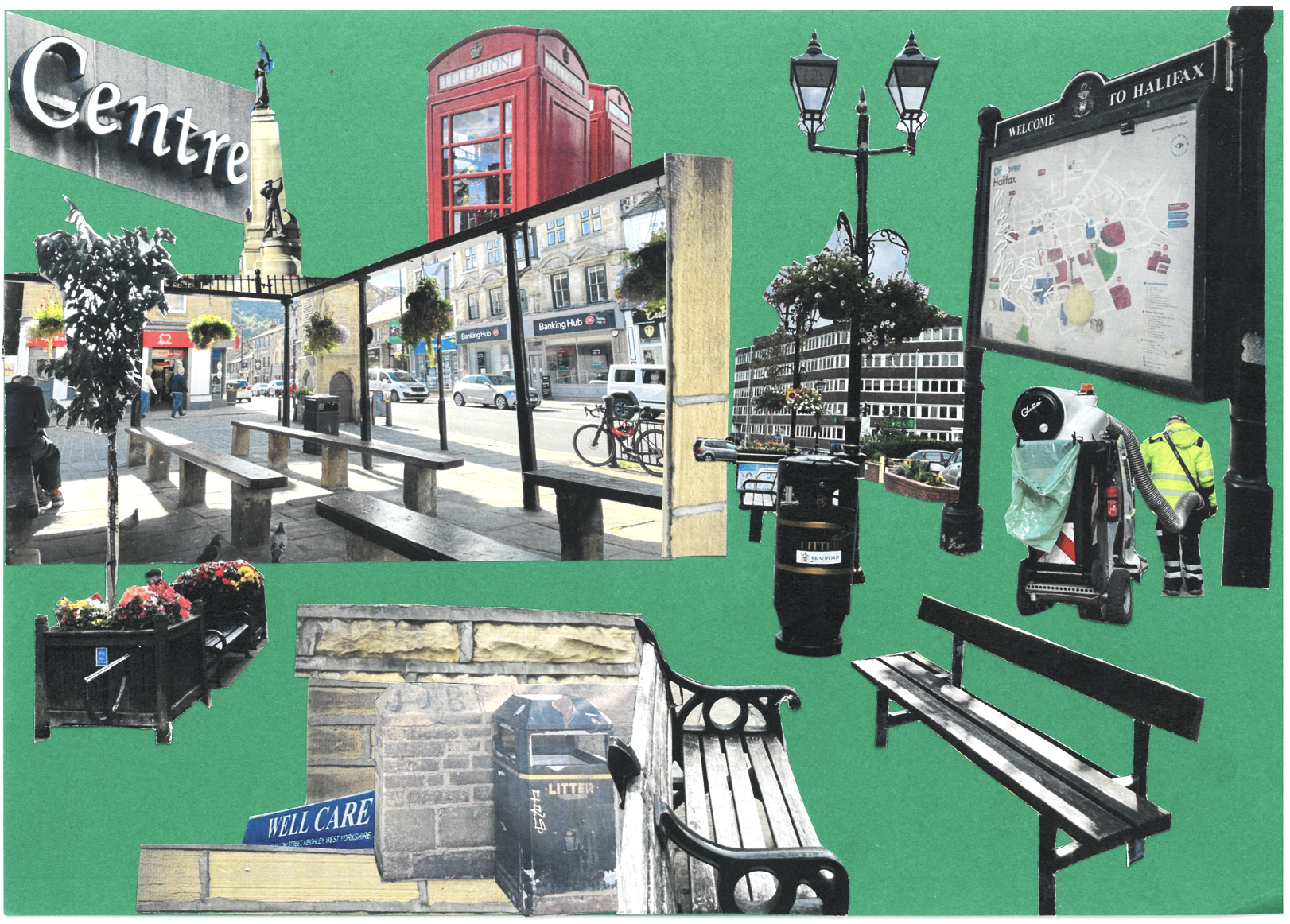
Collage 2. Made using photographs I took in Otley, Keighley, and Halifax.
Moving forward
These are just some of the questions arising in the initial stages of this project. It has also made me reflect on cultures of care when it comes to maintaining street furniture, in relation to active citizenship behaviours (e.g. litter picking). The creative methods being used for the project — such as observation and collaging — are informed by my background as a designer for theatre and performance, which offers a creative perspective on how public space is configured and how everyday objects, such as street furniture, are engaged with — this too is perhaps worth further discussion.
For now, these thoughts about the nature and politics of dwell time are informing the next steps of the project. This will involve connecting with local residents and asking what tweaks to the town centres would encourage them to stay longer. Through this, we hope to gain a better understanding of how people currently experience these places, as well as what changes they might like to see. In turn, this will feed into our continued exploration of street furniture’s influence on everyday lives, shaping the way people move through our towns and cities, accessing the world — as well as asking who gets to spend time participating in public life.
References:
Toderian, B. 2014. Let’s Make Sticky Streets for People! Planetizen. Available at: https://www.planetizen.com/node/69454
Keighley Development Framework. 2024. Available at: https://bradford.moderngov.co.uk/documents/s50922/Doc+BH+-+Keighley+Development+Framework.pdf
Rosenberger, R. 2020. On hostile design: Theoretical and empirical prospects. Urban Studies Journal Limited, 57(4) pp.883–893
Sketchbook:
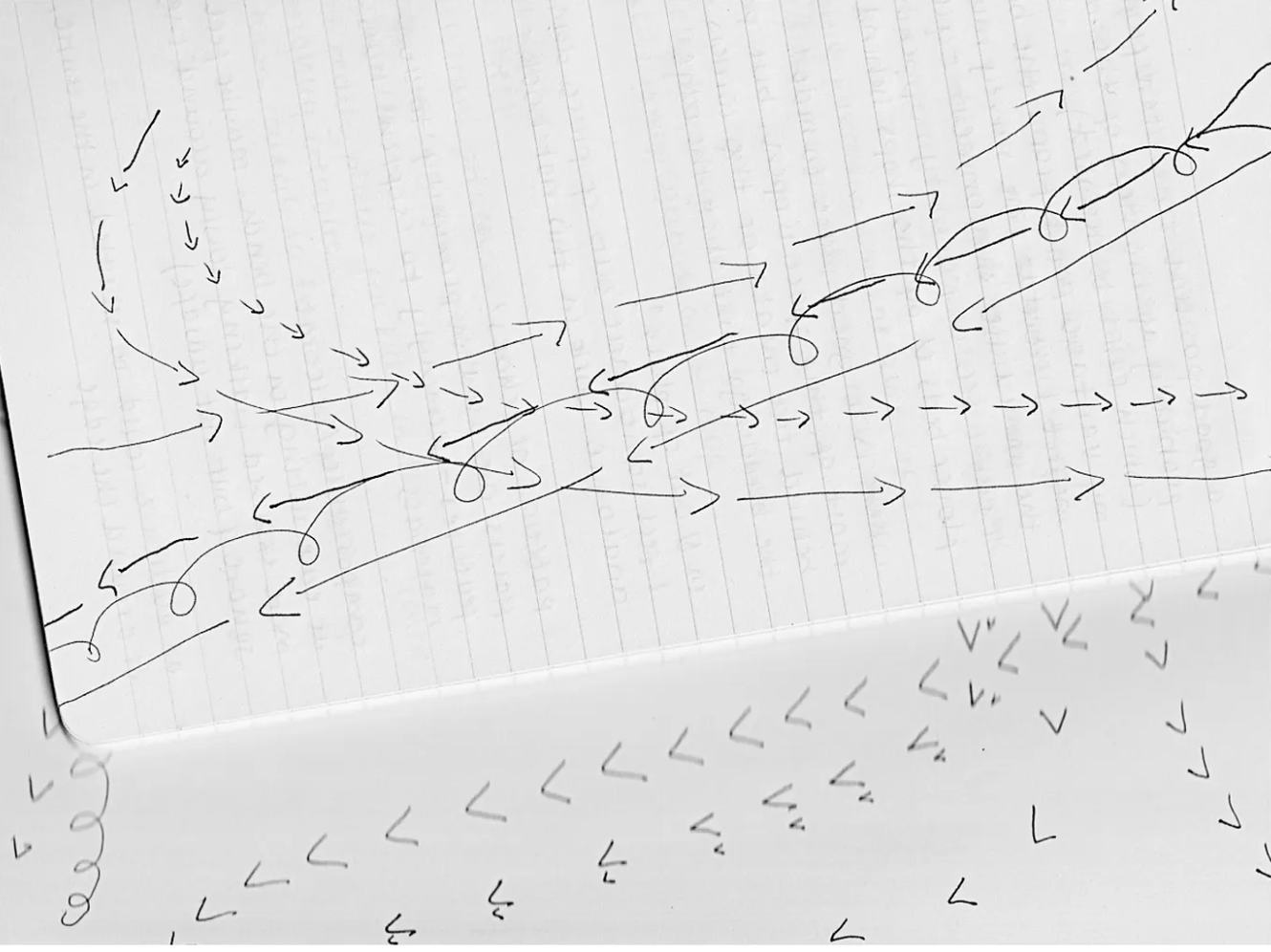
Experiments in capturing movement at Keighley Town Hall Square.